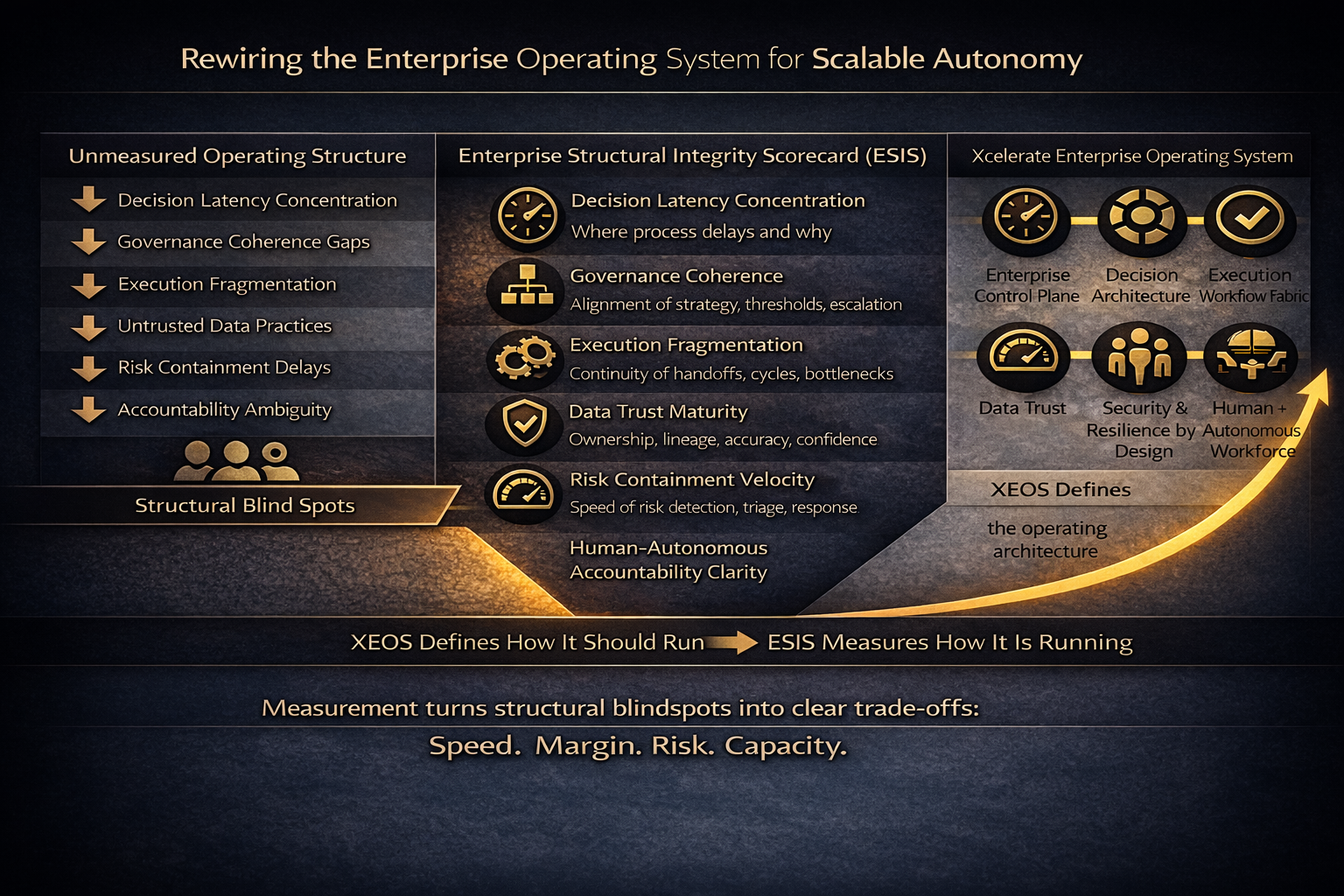
Autonomy does not break because the enterprise lacks ambition.
It breaks when operational complexity scales faster than execution control, decision rights, workflow stability, governance coherence, and accountability structures.
The Failure Pattern
Most enterprises were built around human coordination: meetings, approvals, escalation paths, manual judgment, exception handling, and informal workarounds.
Autonomy changes the speed and density of execution. Work moves faster. Decisions propagate more quickly. Exceptions concentrate. Governance must respond in real time. Operating signals must be trusted. Accountability must remain clear across humans, systems, vendors, and automated execution.
When the operating system is not structurally prepared, autonomy does not create leverage. It exposes fragility.